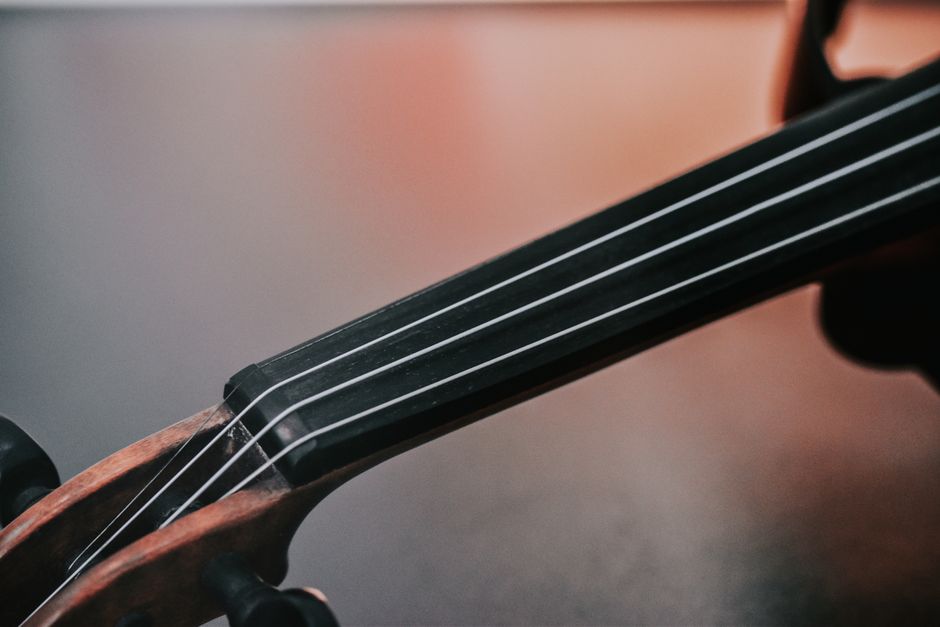
Picture an orchestra a few minutes before a concert begins. Two violinists hold notes that are almost — but not quite — the same pitch, and the room starts to throb: loud, soft, loud, soft, as though the sound itself is breathing. It isn’t a flaw in the tuning, and it isn’t your imagination. It’s a phenomenon called a beat, and tucked inside that slow pulse is a ghost tone that violinists have been noticing for centuries.
Why Two Close Notes Start to Pulse
When two sound waves with very similar frequencies overlap — say 440 Hz and 444 Hz — they don’t stay politely separate. Sometimes their peaks line up and the sound swells; a moment later a peak meets a trough and the sound nearly disappears. This loud-soft cycle repeats at a rate equal to the difference between the two frequencies — in this example, four times a second. The Physics Classroom describes this as simple wave interference: the two tones aren’t fighting each other, they’re just drifting in and out of step, again and again, in a rhythm you can count.
The Third Sound Violinists Have Heard Since 1714
Italian violinist and composer Giuseppe Tartini reportedly first noticed something stranger while practising double-stops in 1714 — a faint, lower note that nobody was playing seemed to hover beneath the two strings he was bowing. He wrote up the effect properly in his 1754 treatise on harmony, and it still carries his name today: the “Tartini tone,” or terzo suono, the third sound. As physicist Joe Wolfe explains on his University of New South Wales physics page, it’s really an auditory illusion — the ear and brain construct that extra low note out of the gap between the two real ones, rather than any string actually vibrating at that pitch.
A Rhythm Your Ear Invents
What’s happening is your inner ear quietly doing arithmetic. The cochlea doesn’t only relay two clean frequencies up to the brain — it responds to how they interact, and out of that interaction comes both a rhythm and, sometimes, a whole new pitch that exists nowhere in the air. It’s one of the small ways hearing behaves less like a microphone and more like an instrument in its own right, actively shaping what you perceive rather than simply recording it. Musicians used this trick for tuning by ear long before electronic tuners existed: as the beat between two strings slows down and eventually disappears, you know the notes have settled into place together. Slow the gap between the two frequencies down further and the pulses come further apart too — a lazy, spacious throb rather than a flutter. Widen it too far, and the ear stops hearing one shared pulse at all; it just hears two separate notes, side by side.
Small Pulses, Steady Company
There’s something quietly grounding about a phenomenon this old and this ordinary — that two near-identical notes, left to their own devices, settle into a pulse you can almost feel as much as hear. It’s a gentle reminder that frequency is never really a single, isolated number; it’s always in conversation with whatever is nearby. That idea is part of what draws us to working with one chosen frequency at a time at WellWave Asia. Each Frequency Infused Crystal Sticker holds a single intended frequency inside a tiny crystal, worn quietly through the day — no wires, no charging, nothing to tune by ear. Just one steady note, kept close, while everything else around it carries on at its own pace.
