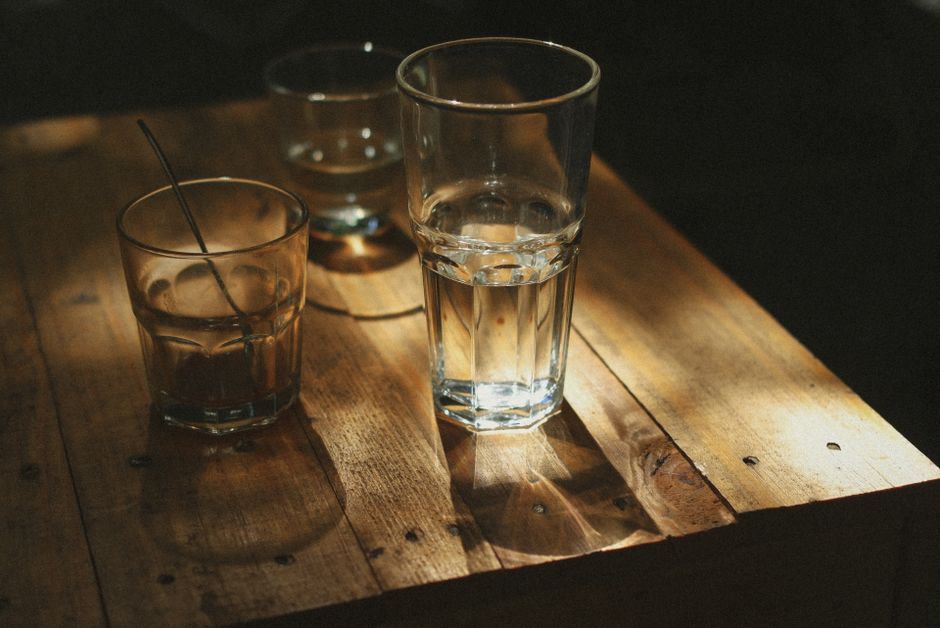
There’s a kind of advice that gets handed down like an old pocket watch — inherited, still ticking, never reset. ‘Drink eight glasses of water a day’ is one of those. Grandmothers repeat it, gym instructors repeat it, and most of us nod along without checking the original source. It sits on almost every wellness checklist in Malaysia, unquestioned, as though it arrived stamped with proof. But where did that number actually come from, and does our body keep the same time it claims to?
Where the Eight Glasses Came From
In 2002, Dartmouth physiologist Heinz Valtin went looking for the science behind the saying, and came back mostly empty-handed. In his review, “Drink at least eight glasses of water a day.” Really? Is there scientific evidence for “8 x 8”?, he traced the rule to a 1945 nutrition board note that mentioned roughly one millilitre of water per calorie eaten — a guideline that already counted the water inside food and drink, not eight separate glasses on top of everything else. Somewhere between the footnote and the folklore, that nuance was quietly dropped, and a friendly rounding error became a rule repeated at dinner tables for decades. Valtin himself, a kidney specialist who had spent a career studying water balance, put it plainly: he could find no scientific proof that every healthy adult must drink that exact amount, though he noted higher intakes may suit hot climates, long flights, or vigorous exercise.
What Our Bodies Actually Ask For
Valtin’s larger point wasn’t that water doesn’t matter — it clearly does — but that our bodies already carry a remarkably good measuring system. Thirst, plus the steady work of the kidneys, keeps most healthy adults in balance without a tally chart. Harvard Health’s overview of the “8 glasses per day” rule echoes this: for people eating a normal diet and drinking when thirsty, the eight-glass figure was never a fixed law of biology, more a rough, rounded suggestion that got treated like scripture. It’s a bit like a thermostat quietly working in the background, keeping the internal climate comfortable whether we’ve had two cups of tea or ten. The kidneys, remarkably, adjust how much water they release depending on what we’ve already taken in — a quiet, self-correcting system working long before any app reminded us to sip.
A Word for Malaysia’s Humid Air
Living close to the equator does change the equation a little. Heat, humidity, and hours spent outdoors or in air-conditioned offices all shift how much fluid we lose and how thirsty we feel, which is why blanket numbers rarely fit everyone equally. Someone cycling in Klang Valley traffic at noon simply isn’t the same as someone working all day under office air-conditioning, and both deserve their own rhythm. As Scientific American’s own look at the question, “Fact or Fiction?: You Must Drink 8 Glasses of Water Daily”, points out, individual needs shift with body size, activity, and climate — a reminder that the kindest approach isn’t a countdown of glasses, but a habit of checking in with how we actually feel across a warm, busy day.
Listening Instead of Counting
None of this means the eight-glasses story deserves scorn — it came from a caring place, a wish to make sure people didn’t run dry. But there’s something gentler in learning to notice our own signals instead of chasing someone else’s number: the dry mouth before a meeting, the heaviness after a long nap in the heat, the small lift that comes from simply pausing to drink when the body asks. That same spirit of tuning in, rather than following a script, is what shapes our Frequency Infused Crystal Stickers. Each FICS patch holds a chosen frequency inside a micro-crystal, worn quietly through the day as a small companion for calm, ease, and steady energy — not a countdown, just a gentle nudge to notice.
