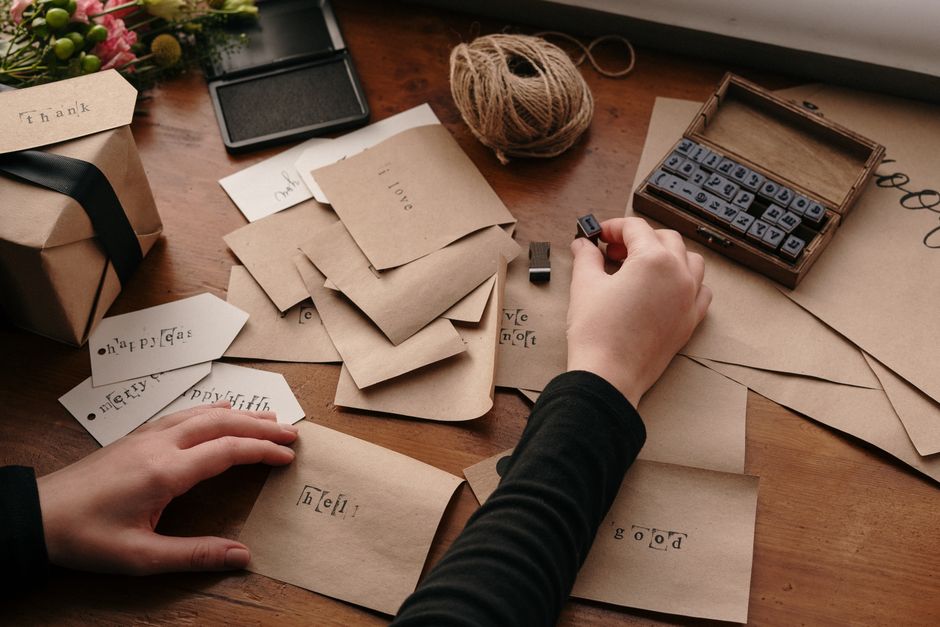
There’s a particular kind of quiet that settles in the car on the drive home, or in the last minutes before sleep — the moment you think, “I should really tell them.” It’s the same hush that hangs in a room when the Wi-Fi drops and the hum you didn’t notice suddenly goes missing. You feel the absence more than you ever felt the presence. That’s often how gratitude works too — we carry it silently for months, sometimes years, and the letter never quite gets written. Maybe it’s the old teacher whose name still comes to mind on hard days, or the friend who showed up without being asked. But the small act of finally putting it into words turns out to do far more than we’d expect, for the person reading it and for the person writing it.
The Study Behind the Letter
Y. Joel Wong of Indiana University led a randomized controlled trial that placed gratitude letter-writing alongside standard counselling. Clients who took time to write a letter to someone they were thankful for showed noticeably better wellbeing scores at both four and twelve weeks afterward — outlasting the writing session itself by a wide margin. Wong’s team traced much of that lift to something subtle: the letter-writers simply used less negative emotional language as they wrote. Framing thanks in words seems to quietly rearrange how the mind is holding a memory, not by erasing what was difficult, but by making a little more room for what was good alongside it.
Why the Lift Lasts
This isn’t just a passing warm feeling. A research summary from Harvard Health notes that people who wrote and personally delivered a thank-you letter to someone who’d never been properly thanked showed an immediate jump in happiness — one that held for a full month. Gratitude appears to nudge attention away from what’s missing and toward what’s already there, a bit like an orchestra settling into tune before the first note plays, each instrument quietly finding its place beside the others.
More Than Manners
Research summarized by the Greater Good Science Center at UC Berkeley frames gratitude as two small, deliberate steps: noticing that good things exist in our lives, then recognizing that much of that good came from outside ourselves — from other people. A letter forces both steps into the open. It isn’t a quick “thanks!” typed between tasks; it’s the slower work of sitting with a memory long enough to describe it properly, and sending that description somewhere it can be read. A text can say thank you in five words; a letter has to explain why, and that explaining seems to be where the real shift happens.
A Small Practice Worth Keeping
You don’t need an occasion to write one. Pick a single person — an old teacher, a friend who showed up during a hard stretch, a family member you’ve never quite thanked out loud — and write two or three unpolished paragraphs about what they meant to you. Say what actually happened: the ride to the airport at 5am, the meal left quietly on your doorstep, the one sentence they said that you still repeat to yourself. It doesn’t need to be eloquent. What matters is the pause it asks of you, and the honesty that tends to show up once you slow down enough to write it.
At WellWave Asia, we’ve noticed that a sense of calm and balance rarely comes from something big or expensive — more often it comes from the small pauses we choose to take. That’s the spirit behind our Frequency Infused Crystal Stickers (FICS): wearable patches holding a chosen frequency inside a micro-crystal, made simply to sit alongside these quiet daily rituals. No promises, no cures — just a gentle companion for the next letter you finally decide to send.
