Picture an orchestra a few minutes before a concert. Every instrument warms up on its own — a violin runs a scale, a trumpet tests a note, a drum rolls somewhere in the back — all at once, none of it in tune with the rest. That’s roughly what the mind sounds like the moment your head hits the pillow: tomorrow’s to-do list, an unanswered message, a small worry that arrived from nowhere, a stray memory of something you said three years ago that suddenly feels urgent again. Before real rest can settle in, all of that needs to come down a register together, the way a conductor’s raised hand brings a room to hush right before the first note.
It turns out a small habit — writing a few lines of thanks before the lights go out — has earned some genuine attention from sleep researchers.
What the Research Found
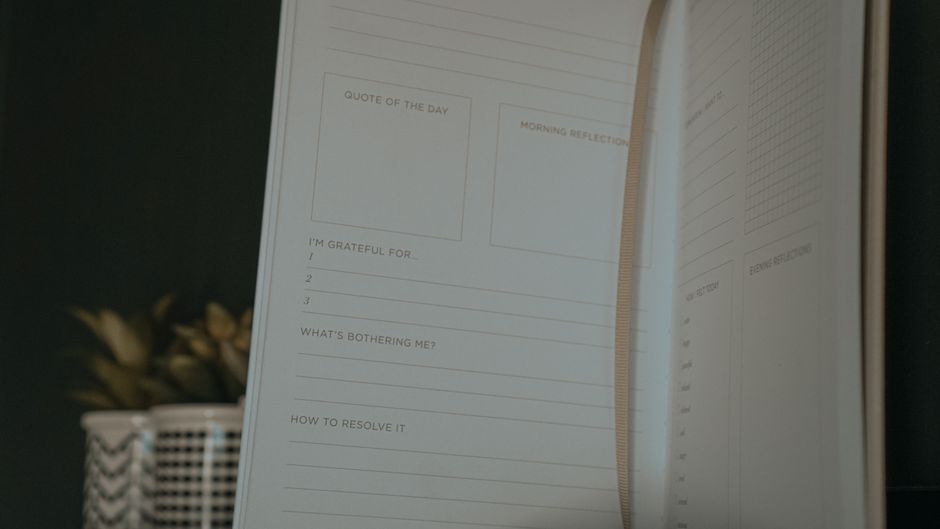
Psychologist Nancy Digdon, working with colleague Amy Koble, tested a few simple bedtime interventions on university students whose minds tended to race at night. One of them was a nightly gratitude journal. After a week, students who jotted a short note of thanks before sleep reported less bedtime worry and steadier sleep patterns compared with their baseline week. What’s notable is how modest the intervention was — no app, no tracking, no elaborate prompts to answer. Just a few honest lines, written before the blanket comes up, were enough to nudge the whole evening in a calmer direction.
Why Naming Good Things Helps
The reasoning behind this holds up. What occupies your mind in those last waking minutes tends to shape how easily it lets go. Research published in the Journal of Psychosomatic Research found that people who lean toward gratitude are less likely to let negative, looping thoughts take over the pre-sleep window — and it’s that quieter mental state that tends to precede better sleep. Gratitude, in other words, isn’t just a nice feeling; it seems to redirect attention away from worry and toward a sense of enough. Think of it like changing the channel before you drift off in front of the television: the broadcast full of tomorrow’s problems gets swapped for something gentler, and the mind, left with fewer sharp edges to snag on, drifts more easily.
Making It a Two-Minute Ritual
You don’t need a leather-bound journal or long paragraphs. Three words are plenty — something today that made you smile a little, a friend’s funny text, tea that stayed warm long enough to enjoy, the way the light looked through the kitchen window at six in the evening. A separate study on bedtime writing found that the act of moving scattered thoughts onto paper — in almost any form — helps the mind set them down, the way you’d finally put down something you’d been carrying all day. Try keeping a small notebook by the bed, or even the notes app on your phone if that’s what’s within reach. Before the lights go off, write two or three things that made the day a little better. There’s no correct way to do it — just honesty and a bit of consistency, night after night, until it stops feeling like an assignment and starts feeling more like exhaling.
A Small Ritual, an Unhurried Wind-Down
At WellWave Asia, we like the idea that a calmer night doesn’t need to be complicated. Much like a short note of thanks can shift the mood before sleep, our Frequency Infused Crystal Stickers (FICS) are designed as a small companion for that quiet stretch of evening — a micro-crystal holding your chosen frequency, worn quietly through the night as part of an unhurried wind-down. No promises, no shortcuts — just one more small way to help mind and body ease down together, night after night.
